Un-Fare Deal: How Fare Policy at Baker’s MBTA Transfers Wealth from Riders to Corporations
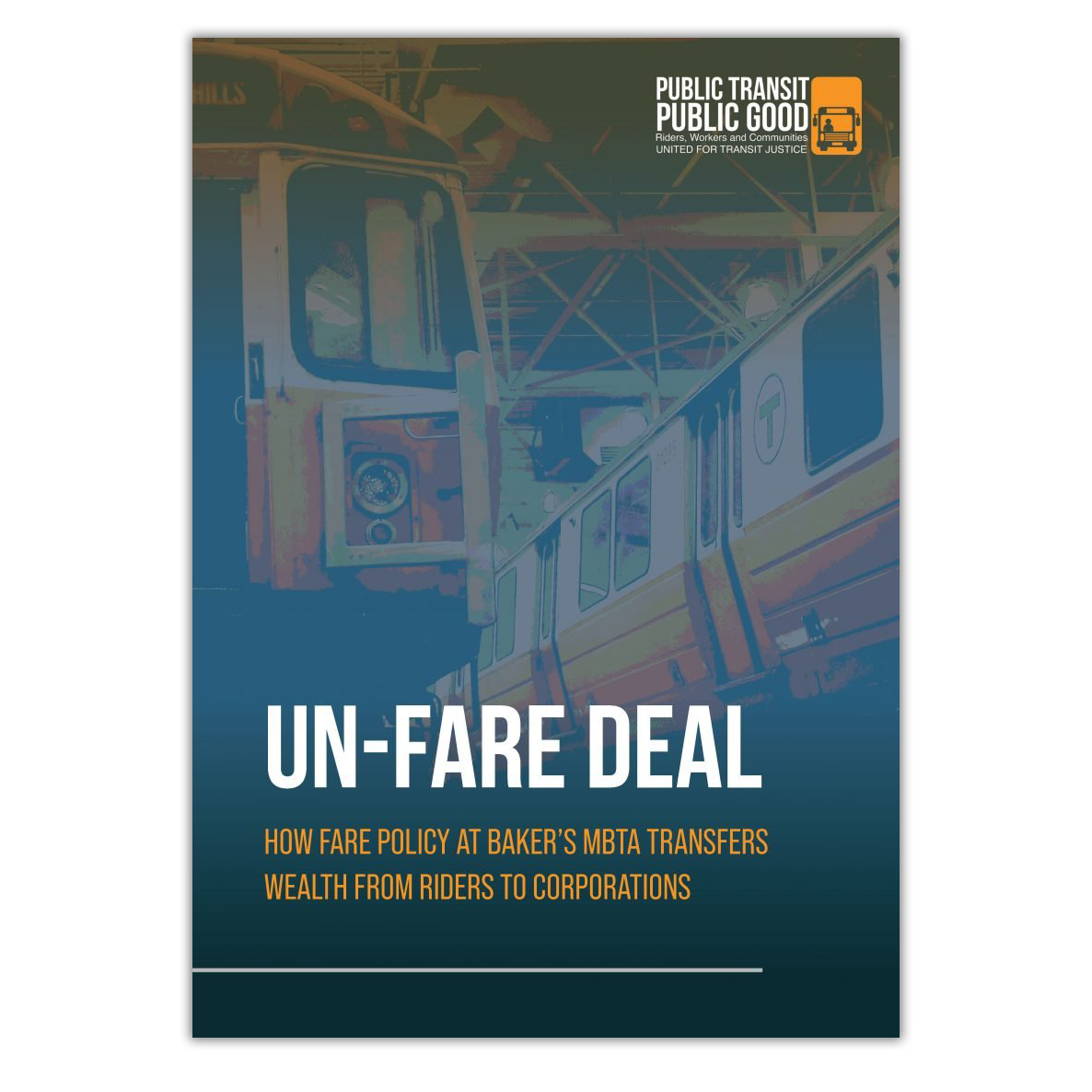
In March 2020, as news of the expanding COVID epidemic swept the nation, essential frontline workers continued to ride the MBTA to work in the snow while the wealthiest stayed home or retreated to vacation homes. Since then, riders from low-income communities and communities of color disproportionately affected by the COVID-19 pandemic were more likely to continue using the MBTA. As other demographics stayed home or used other modes of transport more often, low-income ridership and people of color ridership each grew to 40% or more of the total. Low-income riders and riders of color pay a substantial share of the MBTA’s regressive fare revenue, even as they struggle to afford the cost of riding.
Download Report
In March 2020, as news of the expanding COVID epidemic swept the nation, essential frontline workers continued to ride the MBTA to work in the snow while the wealthiest stayed home or retreated to vacation homes. Since then, riders from low-income communities and communities of color disproportionately affected by the COVID-19 pandemic were more likely to continue using the MBTA. As other demographics stayed home or used other modes of transport more often, low-income ridership and people of color ridership each grew to 40% or more of the total. Low-income riders and riders of color pay a substantial share of the MBTA’s regressive fare revenue, even as they struggle to afford the cost of riding.